
The season is over, the suitcases are packed and the apartment is about to spend five or six months on its own. This is exactly when seaside flats tend to deteriorate all by themselves, with no people, no heating and no airing. In spring the owner opens the door to a musty smell, finds dark patches behind the wardrobe or a swollen edge on a kitchen cabinet door. Almost all of this can be avoided with one calm evening of preparation. Here is what we advise our clients to do before they leave.
The real enemy is humidity, not cold
Winters on the coast are usually mild, so frost is not the thing to worry about. The danger lies elsewhere: damp sea air, rain, wind and the swing in temperature between day and night. In a closed, unheated space, moisture settles on the coldest surfaces: external walls, corners, window reveals and the backs of furniture.
So the aim is not to seal the apartment up tight, but to let it breathe.
- Leave the windows on the micro-ventilation setting if the hardware allows it. A gap of a few millimetres is enough, and neither rain nor intruders will get in.
- Pull the sofa, bed and wardrobes away from external walls, even by just a couple of centimetres. Mould always appears first where the air stands still.
- Leave cupboard, cabinet and interior doors ajar so that air can circulate through the whole flat.
- If you can, leave a dehumidifier running, either one that drains straight into the waste pipe or one that switches off automatically when the tank is full. Simple moisture absorbers with granules also help in wardrobes and the bathroom.
- An air conditioner with a dry mode can be switched on with a timer or via an app. For owners who live abroad, this is the most convenient option.
Water, drains and electrics
Turn off the water at the main valve to the apartment and check that the taps and toilet cistern are not dripping. One drop a minute adds up over a winter to a water bill and a rust streak on the sanitaryware.
- Pour a little water with a spoonful of vegetable oil into the traps of the sinks, bath and floor drain. The film of oil stops the water evaporating, so no smell comes up from the drains.
- Switch off the water heater. If the apartment is on the top floor or in a building that is not heated at all in winter, ask the management company what the neighbours do.
- Leave the door and detergent drawer of the washing machine open, as well as the dishwasher door, or a stale smell will develop inside.
- Defrost the fridge, wash it out and leave the door ajar. A fridge switched off and shut for the winter is a guaranteed unpleasant surprise.
- Unplug everything that does not need to run. Do not switch off the main circuit breaker if you are leaving a dehumidifier, router, camera or sensors on.
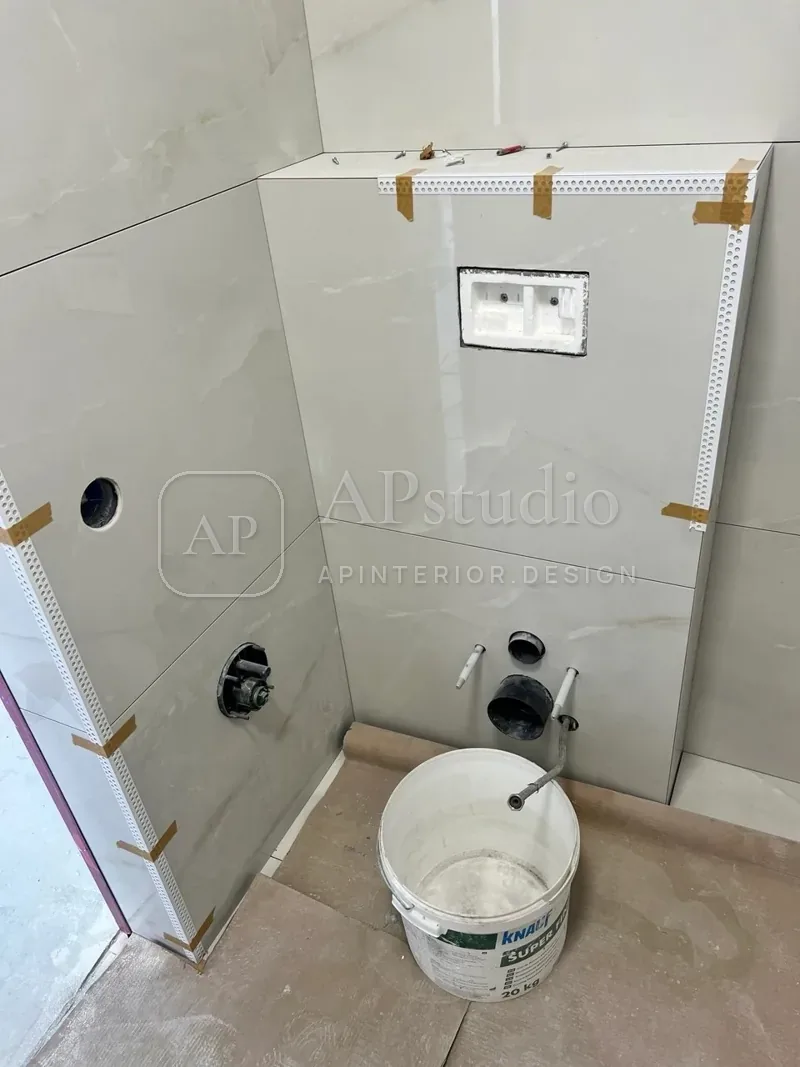
A special word about leak sensors that send an alert to your phone. They are a small purchase that can save both your apartment and the ceiling of the neighbours below. In new projects, Anastasia often advises building in a leak protection system with motorised shut-off valves from the start: when a sensor is triggered, the water is turned off automatically.
Textiles, furniture and the terrace
Fabrics soak up moisture and odours better than anything else in the home, so they are worth a little extra effort.
- Wash bed linen, towels and throws and dry them thoroughly. Store them in closed boxes or vacuum bags rather than on open shelves.
- Put pillows and duvets into covers. You will thank yourself in spring.
- Cover upholstered furniture with light cotton dust covers rather than plastic sheeting, as condensation collects under plastic.
- Draw heavy curtains on south-facing windows: winter sun also fades fabric and wood.
- Clear out any food that might attract insects: rice and grains, sugar, opened packets. And, obvious as it sounds, take the rubbish out.
- Fold, secure or bring in the outdoor furniture on the terrace, and take the cushions indoors. Winter winds on the coast can be strong enough to send a light chair over to the neighbours.
What to ask of the management company or neighbours
Even perfect preparation is no substitute for someone who opens the door now and then. Many complexes offer this as a separate service. Arrange it in advance, before you leave, not in January when something has already happened.
- Call in every two to four weeks: air the place, check the corners and behind the furniture, and empty the dehumidifier.
- Check the apartment after heavy storms and downpours: the terrace, the gutters, and whether anything is leaking from above.
- Send a couple of photos or a short video, so you have peace of mind and any problem is spotted early.
- Keep to hand the contacts of a plumber and an electrician who can be trusted with a key.
Make a note of who holds the key and give that person your messenger number. It is a small thing, but at the right moment it saves a lot of stress.
In spring, check first, then unpack
When you arrive, open the windows, run water from every tap for a few minutes and look behind the furniture along the external walls. If mould or damp keeps appearing in the same places year after year, the problem is usually not your preparation but the apartment itself: the ventilation, a cold corner or a hidden leak. That is something to fix as part of a renovation.
If your apartment gets damp every winter, or you are planning a renovation and want to build in leak protection, proper ventilation and remote climate control from the outset, get in touch. We will look at what can be done in your apartment, and you can get a rough idea of the budget in advance with the calculator on our website.
Still have questions?
Tell us about your property and we will get back to you with a preliminary estimate.